
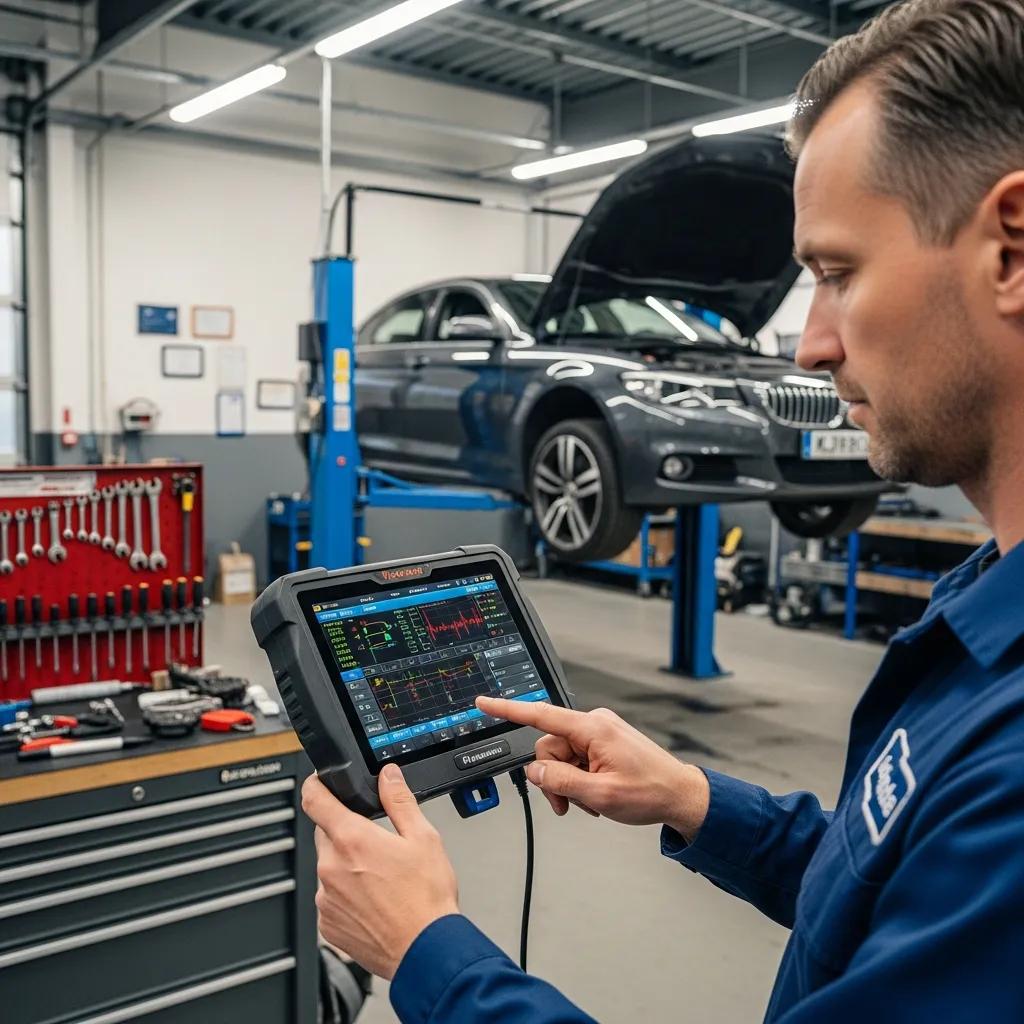
Advanced Automotive Diagnostics Explained: What You Need to Know for Effective Vehicle Troubleshooting
Advanced automotive diagnostics combines electronic data, specialized tools, and methodical troubleshooting to identify root causes faster and with fewer parts replaced. This article explains how modern diagnostics—centered on OBD-II systems, ECUs, live-data logging, and specialist tools—turn ambiguous symptoms into actionable repairs that save time and money. You will learn the diagnostic data flow from sensors to control modules, how scan tools and oscilloscopes are used, which vehicle systems are commonly assessed, and when professional diagnostics are the right choice. The guide also covers electrical and brake-system methods, a compact checklist for full car diagnostic checks, and emerging trends like remote diagnostics and AI-driven predictive maintenance. Throughout, practical examples and comparison tables clarify when to use an OBD-II scanner versus an oscilloscope or thermal camera, helping you interpret diagnostic trouble codes and plan repairs more effectively.
What Are Advanced Automotive Diagnostics and How Do They Work?
Advanced automotive diagnostics is the systematic use of sensors, control modules, and diagnostic tools to detect faults and verify repairs. It works by collecting sensor signals, having the ECU interpret those signals into diagnostic trouble codes, and using scan tools and specialist instruments to confirm root causes. The benefit is faster, evidence-based troubleshooting that reduces guesswork and costly part swaps. Understanding this flow helps owners and technicians translate a warning light into a targeted repair strategy.
Intro to the quick-reference mapping for key diagnostic entities and why each matters.
| Component | What it reports | Why it matters |
|---|---|---|
| OBD-II system | Emissions monitors and DTCs for engine and powertrain | Identifies regulatory and performance faults quickly |
| ECU (engine control unit) | Real-time sensor inputs and actuator commands | Central decision node for diagnostics and control |
| DTC (diagnostic trouble code) | Encoded fault descriptors (system, subsystem, fault) | Narrows the search to likely fault areas |
This table clarifies the roles that enable a car computer scan to move from symptom to verified fault.
What Is the Role of OBD-II Systems and Diagnostic Trouble Codes?
OBD-II is the standardized onboard diagnostic framework that monitors emissions-related systems and logs diagnostic trouble codes when parameters fall outside expected ranges. Codes follow structured formats that indicate system and fault type, and are the starting point for investigation rather than a definitive repair instruction. A typical workflow reads codes with an OBD-II scanner, examines live data for supporting evidence, and then performs targeted tests to confirm the failing component. Knowing the limits of codes prevents one-shot part replacements and keeps troubleshooting focused.
OBD-II code structure examples:
- P0XXX codes indicate powertrain faults related to engine and transmission systems.
- U0XXX codes point to communication errors on networks like CAN-bus.
- P1XXX codes often identify manufacturer-specific issues requiring advanced scanners.
These examples show how code prefixes guide the diagnostic path and when additional tests are required to confirm the root cause.
How Do Diagnostic Scan Tools and Techniques Identify Vehicle Issues?
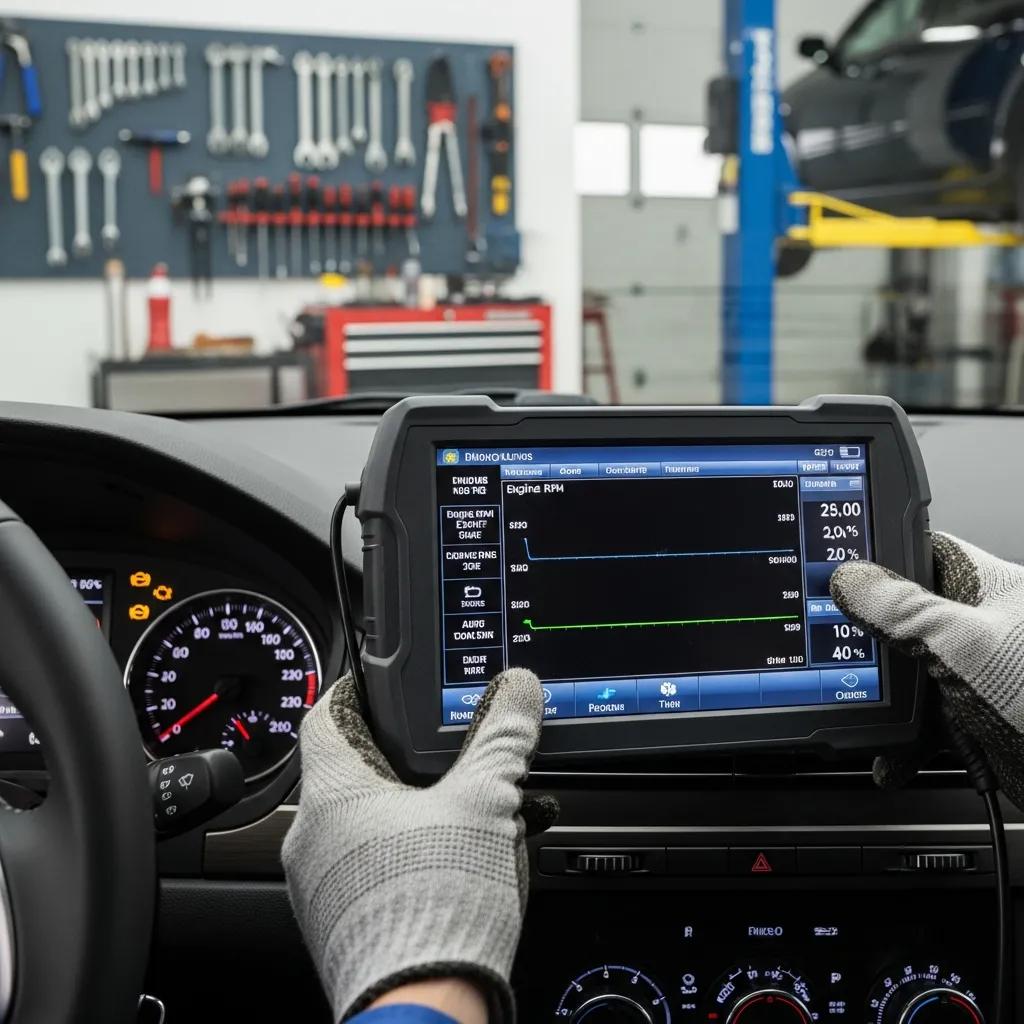
Diagnostic scan tools collect stored codes, live sensor data, and freeze-frame snapshots to reveal the conditions present when a fault occurred. Live-data monitoring shows sensor trends and relationships that raw codes cannot, and data-logging captures intermittent faults for later analysis. Specialist tools—oscilloscopes for waveform analysis and thermal cameras for heat anomalies—provide confirmatory evidence where scan data alone is ambiguous. This layered approach reduces misdiagnosis by combining code reads with instrument-based verification.
Tool comparison by primary use-case follows.
| Tool | Primary use | Example diagnostic scenario |
|---|---|---|
| OBD-II scanner | Read codes and live PIDs | Detecting misfires and fuel trim anomalies |
| Oscilloscope | Waveform and timing analysis | Confirming crank sensor signal integrity |
| Thermal imaging camera | Temperature profiling | Locating hot spots on exhaust or cooling circuits |
This comparison helps match a symptomatic observation to the tool most likely to confirm or rule out candidate faults.
Which Vehicle Systems Are Commonly Diagnosed Using Advanced Automotive Diagnostics?
Advanced diagnostics covers engine, transmission, electrical, brake, and emissions systems using targeted tests and module communication checks. Each system yields characteristic symptoms—such as rough idle for engine faults or delayed shifts for transmission issues—that guide the initial scan and confirmatory testing. The diagnostic process escalates from OBD-II scans to subsystem tests and then to component-level verification when required. This hierarchy preserves data-driven decision-making and avoids unnecessary component replacement.
A compact mapping of common symptoms to standard tests follows.
| System | Common symptoms | Diagnostic tests/tools |
|---|---|---|
| Engine | Misfire, poor economy, check engine light | OBD-II scan, live data, compression, oscilloscope |
| Transmission | Slip, harsh shifts, limp mode | Scan tool for TCM codes, pressure tests, road data logging |
| Electrical/ABS | Intermittent faults, sensor errors | Multimeter, oscilloscope, CAN-bus scan, thermal imaging |
These mappings show the diagnostic path from symptom to specific tests that technicians use to isolate faults efficiently.
Titan Auto Tech in Castle Rock, CO has hands-on experience diagnosing engine, transmission, and electrical systems, including make-specific expertise for BMW models and targeted engine diagnostics services. Their local service offering complements the diagnostic strategies described above for owners seeking professional assistance.
How Are Engine and Transmission Problems Detected and Analyzed?
Engine and transmission diagnostics begin with DTCs and live data to confirm symptoms such as misfires, rough running, or shift irregularities. For engine misfires, technicians examine ignition, fuel, and compression data and often use an oscilloscope to verify ignition waveforms and injector timing. Transmission faults require reading TCM codes, analyzing shift patterns through logged road data, and performing hydraulic or pressure checks when electronic signals appear normal. A stepwise confirmation avoids replacing parts until evidence supports the specific failed component.
This evidence-first workflow reduces repeat repairs and improves repair accuracy by pairing scan data with selective bench or in-vehicle tests.
What Are the Methods for Electrical and Brake System Diagnostics?
Electrical diagnostics use voltage, resistance, and continuity tests plus waveform analysis to locate wiring faults, intermittent connections, or failed sensors. Technicians probe module communication on networks like CAN-bus, checking for errors that indicate wiring or module faults and employing oscilloscopes to validate sensor signals. ABS and brake electronics are diagnosed with wheel-speed sensor checks, module code reads, and thermal inspection to find heat-related failures. These methods confirm both signal integrity and physical component function before replacement.
Structured electrical verification keeps troubleshooting efficient by separating communication faults from sensor or actuator failures.
Why Should You Choose Professional Car Diagnostic Services for Your Vehicle?
Professional diagnostics deliver accurate root-cause identification, preserve safety systems, and often reduce total repair costs compared with trial-and-error part swaps. Certified tools and trained technicians interpret complex interactions between ECUs, sensors, and actuators to produce targeted repair plans. Advanced diagnostics also account for software, calibration, and communication issues that DIY OBD-II scans cannot resolve reliably. Choosing a professional service minimizes downtime and helps maintain long-term vehicle reliability.
Key benefits of professional diagnostic services include:
- Accuracy and speed: Advanced tools identify root causes faster than manual guessing.
- Cost avoidance: Targeted repairs prevent unnecessary parts and labor expenses.
- Safety and compliance: Professionals ensure systems tied to safety and emissions are correctly repaired.
These advantages make professional diagnostics a prudent investment when symptoms persist or involve complex control modules.
Titan Auto Tech combines expert technicians with advanced diagnostic equipment and a focus on maintaining vehicle performance and reliability; customers in Castle Rock, CO seeking make-specific attention—such as BMW engine repair and diagnostics—can request an evidence-based diagnostic assessment to prioritize needed repairs.
What Are the Benefits of Early Problem Detection and Cost Savings?
Detecting problems early prevents escalation from minor faults to major failures that require extensive labor and expensive parts. For example, fixing a sensor or wiring issue promptly can avoid catalytic converter damage or transmission overhaul later. Early detection also enables planned maintenance windows, reducing the risk of roadside breakdowns and associated towing costs. Quantifying savings depends on the specific failure chain, but the principle remains: targeted early repairs keep total ownership costs lower.
This preventative approach encourages scheduled diagnostics when warning signs or intermittent faults first appear.
How Does Expert Diagnostic Service Improve Vehicle Performance and Reliability?
Expert diagnostics restore intended performance by identifying root causes and verifying repairs, which improves fuel economy, emissions control, and drivability. Accurate calibration and software updates applied after diagnostics ensure modules interact correctly and prevent repeat faults. Professionals also confirm that repairs meet safety and durability expectations through road tests and post-repair scans. This validation reduces comebacks and extends service intervals by addressing underlying causes rather than symptoms.
The result is more reliable operation and measurable improvements in vehicle behavior after confirmed corrective actions.
What Are the Emerging Trends and Future Developments in Automotive Diagnostics?

Diagnostics are shifting toward remote monitoring, predictive maintenance, and cloud-assisted analysis that flag anomalies before they become breakdowns. Remote diagnostics capture telematics data and alert owners or fleet managers to developing faults, enabling proactive service scheduling. AI and machine learning add pattern recognition to identify subtle signs of failure across large datasets, improving triage and prioritization. Data security and standardized interfaces remain essential considerations as connectivity expands.
Emerging trends to watch include the following practical examples.
- Remote diagnostics for fleet management that reduce downtime through early alerts.
- Predictive vehicle maintenance that schedules service based on trend analysis rather than fixed intervals.
- AI-driven triage that suggests likely causes by correlating sensor patterns across many vehicles.
These trends promise reduced unscheduled repairs and smarter maintenance decisions while introducing requirements for secure data handling and robust diagnostic workflows.
How Will Remote and Predictive Diagnostics Transform Vehicle Maintenance?
Remote and predictive diagnostics allow issues to be detected before they interrupt service by analyzing live telematics and historical performance data. Fleet operators benefit from reduced downtime, while owners receive alerts for actionable maintenance needs that can be scheduled proactively. Limitations include reliance on connectivity and secure data management to protect owner privacy. As implementations mature, owners should expect more personalized maintenance schedules and earlier detection of intermittent faults.
This shift toward predictive service models will change how maintenance is planned and executed.
What Role Do AI and Advanced Technologies Play in Modern Diagnostics?
AI helps triage fault reports by recognizing patterns that human technicians might miss, accelerating diagnosis and suggesting high-probability causes for investigation. Machine learning models trained on large datasets can predict component failures and prioritize inspections. However, AI outputs require human validation and high-quality labeled data to be reliable. Integration of AI into shop workflows enhances efficiency but does not replace the confirmatory testing and hands-on verification that professional diagnostics provide.
These technologies augment technician expertise, creating faster and more accurate diagnostic workflows.
Contact Titan Auto Tech in Castle Rock, CO to schedule an advanced diagnostic assessment with experienced technicians and specialized equipment; check their business profile or primary website for booking and local service information.