
Diagnostic Fees: Essential Investments
Modern cars depend on sophisticated electronic control systems. Automotive diagnostics is the process of reading, interpreting, and testing those systems to find faults and guide repairs. Below we explain how diagnostic tools talk to onboard computers (ECUs), why routine diagnostic checks save money and improve safety, and when manufacturer-level programming or coding is required to restore or add functionality. You’ll get a clear scan-to-repair workflow, the differences between basic OBD-II scanners and factory tools, and brand-specific notes for BMW, Mercedes, Audi, Toyota, and Honda. Finally, we show how a local specialist — Titan AutoTech — applies advanced diagnostics, secure programming, and clear reporting to keep European and Asian vehicles running right.
What Are Automotive Diagnostics and How Do They Work?
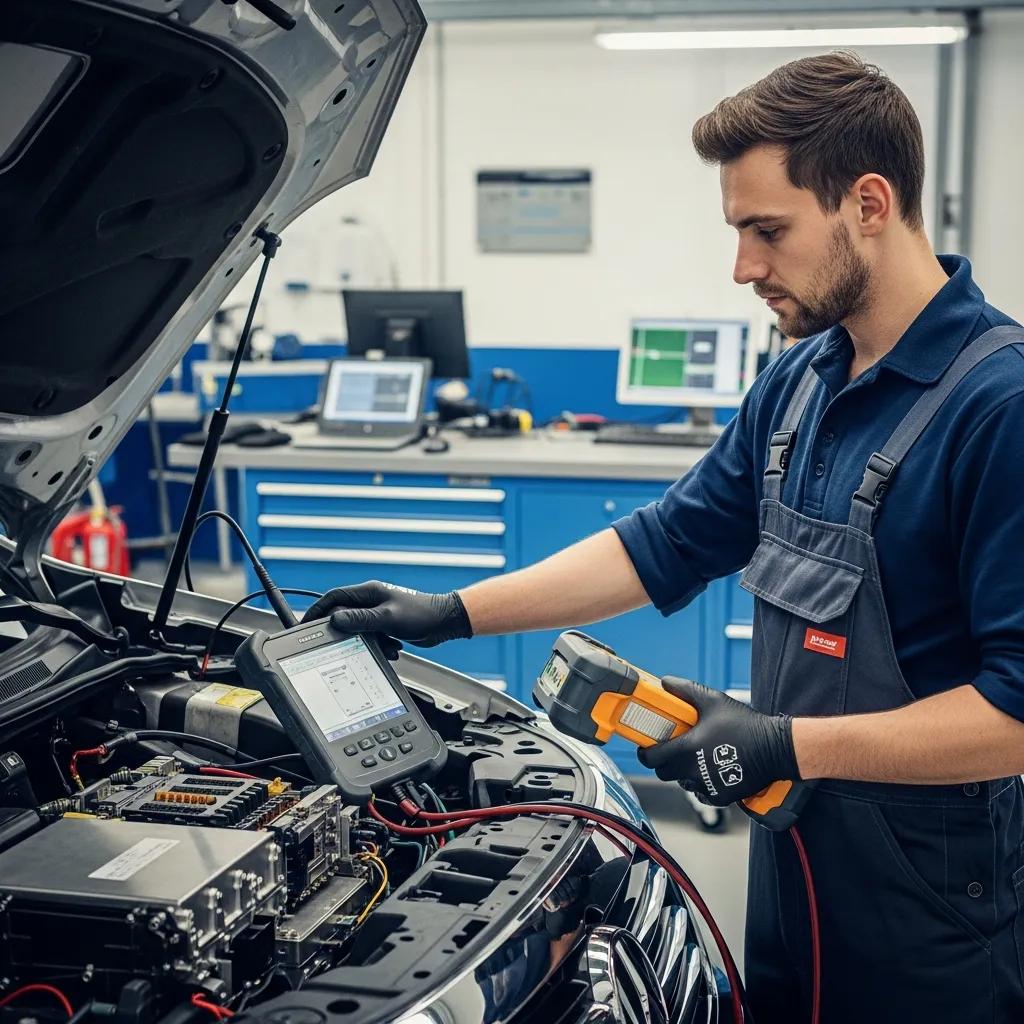
Automotive diagnostics is a step-by-step process: connect diagnostic hardware to the vehicle network, read diagnostic trouble codes (DTCs), watch live sensor data, and run guided tests to isolate the root cause and recommend repairs. Modern diagnostics depends on ECUs communicating over CAN and LIN networks; scanners pull stored codes and freeze-frame data that help a technician decide whether the fault is a sensor, wiring, or component issue. The result is faster, more accurate repairs, fewer replaced parts, and safer, more efficient operation. From a simple code read to targeted tests, bi-directional control, bench work, or module replacement, diagnostics gives a logical path from symptom to repair.
Tools come in tiers and each tier unlocks different capabilities. Choosing the right tool affects both the accuracy of the diagnosis and the scope of the repair. Below is a compact comparison to show which tools are suited to routine scans and which are needed for deeper work such as manufacturer programming.
If you want ongoing insights, see our blog for practical examples and case studies.
| Tool Category | Access Level | Typical Capabilities |
|---|---|---|
| Generic OBD-II scanner | Basic (powertrain only) | Read/clear engine codes, basic live PIDs, emissions checks |
| Aftermarket advanced scanner | Moderate (multiple modules) | Live data streams, ABS/airbag reads, service resets, guided tests |
| Manufacturer-level tool | High (full module access) | Module programming, coding, SCN/OTA updates, security access |
| Bench diagnostic equipment | Variable | Component-level bench tests and waveform analysis |
This comparison explains why a generic scan can start a diagnosis but manufacturer-level tools are often required to program modules or perform secure updates on many European vehicles. Knowing tool capability helps you choose between a routine scan and specialist intervention.
Technicians convert electronic data into repairs using a consistent, stepwise workflow:
- Scan: Plug in at the OBD-II or factory port and pull stored and pending DTCs.
- Interpret: Match codes with live data, freeze-frames, and service history to narrow causes.
- Test: Run guided tests, activate components bi-directionally, and perform bench tests when needed.
- Repair & Verify: Replace or repair parts, reprogram modules when required, then confirm resolution with verification drives.
Following this sequence reduces guesswork and creates a verifiable path from symptom to resolution, which is especially important for intermittent or complex faults.
How Do Advanced Car Diagnostic Tools Identify Vehicle Issues?

Advanced diagnostic tools combine DTC retrieval with high-resolution live-data streaming, freeze-frame context, and guided test sequences that exercise sensors and actuators. Many scanners can command components (bi-directional control) to confirm whether an actuator responds or whether the fault lies earlier in wiring or sensors. They also show sensor trends so technicians can catch intermittent faults that a single snapshot would miss. For example, an intermittent misfire becomes clear when fuel trim swings and crank angle timing are observed across multiple cycles — pointing to ignition or fueling problems rather than immediate mechanical failure. When tool limits or complex module failures are suspected, the workflow escalates to manufacturer-level programming or bench testing for component-level verification.
Escalating from a code read to guided activation and bench testing naturally leads to a deeper look at vehicle computer architecture and why specialist access is sometimes required for a full repair.
For broader context on diagnostic methods and tools, see our main site resources at Titan AutoTech.
Advanced Automotive Fault Diagnosis & Diagnostic Tools
The latest materials on advanced automotive fault diagnosis cover diagnostic tools, system components, and current techniques used in the industry.
Advanced automotive fault diagnosis: automotive technology: vehicle maintenance and repair, 2020
What Is the Role of Vehicle Computer Diagnostics in Modern Cars?
Vehicle computer diagnostics focuses on Electronic Control Units (ECUs) that manage engine, transmission, braking, and driver-assistance systems. These modules exchange data over CAN bus networks and rely on sensors and actuators to execute control strategies. Diagnostic tools query ECUs for fault codes, calibration data, and status messages that reveal where a subsystem is failing — for example, distinguishing a bad wheel speed sensor from a wiring short that disables ABS. Interpretation matters: the same code can come from a failed sensor, a corroded connector, or a software bug, so technician experience is essential to link code data with real-world faults. In many repair scenarios, certain module functions require manufacturer-level access for safe programming, making factory-level diagnostics essential to fully restore system function.
Because networked ECUs can mask root causes, understanding how sensors, wiring, and module software interact is the foundation of accurate diagnosis and proper repair.
Why Are Regular Vehicle Health Checks Essential?
Regular vehicle health checks combine diagnostic scans and inspections to catch small issues before they become breakdowns, protecting safety and lowering ownership costs. Scheduled diagnostic checks spot early sensor drift, pending emissions faults, or software anomalies that reduce fuel economy and performance if left unchecked. By tracking sensor trends and confirming module health, technicians can plan repairs at convenient times instead of reacting to roadside failures. The benefits are measurable: fewer tow fees, fewer emergency repairs, and stronger resale value thanks to documented digital inspections.
This proactive approach fits with modern predictive maintenance strategies that shift care from reactive to planned service.
Predictive Vehicle Health Diagnostics for Enhanced Maintenance
Integrating machine learning into predictive vehicle health diagnostics is changing maintenance by improving reliability, optimizing service intervals, and preventing failures. Traditional maintenance often relies on reactive or rigid schedules, which can lead to unnecessary costs and unexpected breakdowns.
… PREDICTIVE VEHICLE HEALTH DIAGNOSTICS: ENHANCING RELIABILITY, MAINTENANCE STRATEGIES, AND FAILURE PREVENTION IN AUTOMOTIVE …, LD Adewale
Regular checks also protect safety-critical systems and preserve warranty coverage, which ties into the preventative benefits below.
Routine diagnostic maintenance delivers clear owner benefits. Regular scans are a key part of keeping your vehicle in top condition.
- Reduced Emergency Repairs: Early detection lowers the chance of costly breakdowns and towing.
- Improved Fuel Efficiency: Correcting sensor or calibration errors restores optimal engine operation.
- Extended Component Life: Fixing issues before failure prevents damage to related systems.
What Are the Benefits of Preventative Diagnostic Maintenance?
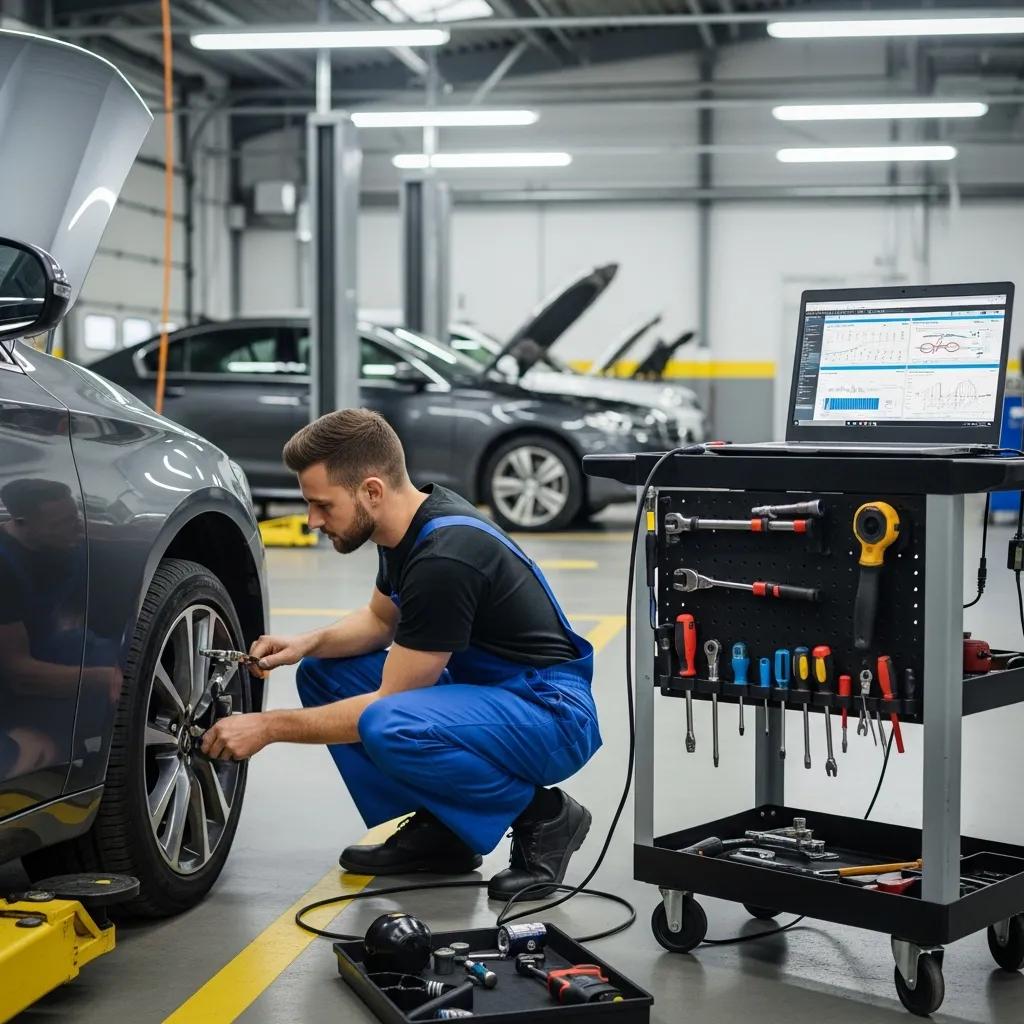
Preventative diagnostic maintenance lowers long-term ownership costs by catching marginal sensors and modules before they fail catastrophically, avoiding secondary damage — for example, a failing mass airflow sensor that contributes to premature catalytic converter wear. This approach emphasizes trend analysis and scheduled verification of systems like fueling, ignition, and emissions so interventions can be timed to maximize component life. Preventative checks also make budgeting clearer, reduce downtime through planned service, and can boost resale value when inspections are documented.
How Do Diagnostics Improve Vehicle Performance and Safety?
Diagnostics improve performance and safety by finding sensor errors, control module faults, and software mismatches that harm drivability, emissions, and systems like ABS, airbags, and ADAS. An ABS sensor fault, for example, can upset braking stability; diagnosing the sensor, wiring, and module response restores proper braking and prevents unnecessary ABS interventions. Fixing fuel trim or ignition timing faults smooths power delivery and lowers emissions. Accurate diagnostics ensure ADAS systems receive correct sensor input, keeping lane-keeping, adaptive cruise, and collision mitigation functioning as designed.
Restoring sensor accuracy and module integrity is both a performance and safety priority in modern vehicles.
How Do European Car Diagnostic Services Differ from Others?
European car diagnostic work often requires manufacturer tools and secure access procedures to perform coding, programming, and adaptations that generic scanners can’t handle. European OEMs use proprietary protocols, security access levels, and SCN/OTA procedures that control module software versions, immobilizer pairing, and subsystem calibrations. Practically, full repair scope after component replacement may need tools like BMW programming or Mercedes XENTRY to complete coding and ensure compatibility. Generic scanners are useful for initial scans and many repairs, but they generally cannot reprogram modules or perform protected adaptations required to restore feature sets or follow OEM repair procedures.
Below is a quick reference showing which brand tools are used for specific tasks.
| Brand | Tool/Software | Typical Tasks/Restrictions |
|---|---|---|
| BMW | ISTA / ISTA-P | Diagnostics, SCN coding, module programming, adaptations |
| Mercedes | XENTRY | Full module access, security coding, software updates |
| Volkswagen / Audi | VCDS / ODIS | Coding, adaptations, controller flashes (ODIS for programming) |
| Porsche | PIWIS | Advanced diagnostics, programming, calibration tasks |
What Specialized Tools Are Used for BMW Diagnostic Programming?
BMW diagnostics commonly use ISTA for guided troubleshooting and ISTA‑P for software distribution and SCN coding. These tools handle module coding, variant coding, and calibrations required after control unit replacement or new component installation. ISTA guides diagnostic tests while ISTA‑P applies manufacturer updates and makes sure modules receive matching software versions and security registrations. Typical programming tasks include VANOS adaptations, DME reflashes, and immobilizer re-pairing after ECU replacement. Since some BMW modules require SCN coding tied to VIN and software licenses, dealer-level or fully provisioned independents with authorized access complete these operations safely. See our BMW diagnostics page for more detail.
Understanding the difference between diagnostic software and programming tools like ISTA and ISTA‑P clarifies what manufacturer-level capabilities are required.
BMW ISTA P: Manufacturer-Level ECU Programming & Coding
BMW also provides a separate program for coding and programming called ISTA P (ISTA Programming). ISTA+ requires at least 20 GB of disk space for installation, while ISTA P needs around 100 GB.
BMW diagnostic software comparison, 2020
Why Do Brands Like Mercedes and Audi Require Manufacturer-Specific Diagnostics?
Manufacturers such as Mercedes and Audi restrict certain module functions behind security access and proprietary communication layers. Full-feature coding, immobilizer programming, and many software updates require authenticated manufacturer tools. These protections prevent incorrect coding that could affect safety or emissions, but they also limit the usefulness of generic scanners for full restoration after component swaps. Incorrect coding attempts risk disabling features or creating persistent faults, so authorized service with the right tools is important for reliable results.
Knowing these limits helps owners decide when to bring a vehicle to a specialist rather than relying on a basic scan.
What Is Vehicle Programming and Coding and Why Is It Valuable?
Vehicle programming and coding cover ECU software updates (reflashing) and configuration of module parameters (coding) so modules communicate correctly, enable factory features, or receive manufacturer fixes. Programming replaces or updates the software image in an ECU to fix bugs, improve drivability, or address service bulletins, while coding adjusts settings to match vehicle options or new hardware. The benefits are restored module interoperability, enabled factory features, and resolution of software-related recalls or defects that affect safety or emissions. Learn more on our programming page.
Here’s a practical breakdown of common programming and coding services and what they deliver.
| Service | When Needed | Benefit/Outcome |
|---|---|---|
| ECU Reflash / Reprogram | Manufacturer update, emissions fix, drivability issue | Restores optimized software, fixes bugs, improves efficiency |
| Module Coding | After part replacement or retrofit | Matches new module to vehicle options, enables features |
| Software Update / SCN | Security patch or recall | Applies mandated fixes and ensures compliance |
How Does ECU Reprogramming Enhance Vehicle Functionality?
ECU reprogramming applies manufacturer software updates that correct calibration errors, refine throttle and shift logic, and resolve emission-control issues. These updates can improve drivability, fuel economy, and reliability when done correctly. Examples include throttle mapping tweaks, transmission shift optimizations, and emissions recalibrations after sensor replacement. Reflashes are often a safer alternative to unnecessary part replacement when the root cause is software-related, but they require the correct software version and, in some cases, security codes tied to VIN and module serials. Proper labeling and post‑flash verification are critical to avoid compatibility problems.
Knowing when a reflash is the right remedy avoids needless hardware expense and preserves system integrity.
What Are Module Coding and Software Updates in Automotive Services?
Module coding changes configuration data in control units to reflect vehicle options, enable accessories, or integrate new hardware; software updates replace or patch ECU firmware to fix issues or add improvements. Coding is often necessary after installing replacement modules, new keys, or aftermarket retrofits so the module communicates correctly with the vehicle. Software updates address known defects and may arrive as technical service bulletins or recalls; applying them restores OEM behavior and can cure intermittent faults. A short checklist for coding after parts replacement includes verifying part compatibility, obtaining required security access, and following the manufacturer procedure.
These services are distinct but complementary parts of modern vehicle care.
When Should You Schedule Automotive Diagnostics?
Schedule diagnostics immediately for urgent symptoms like warning lights, sudden power loss, or smoke, and schedule routine scans at regular intervals or before long trips to catch emerging issues. Immediate alarms demand fast scanning and triage to prevent safety risks or further damage. Planned diagnostic checks focus on trend detection and preventative maintenance. Frequency depends on use and vehicle complexity: older European performance cars or high-mileage vehicles benefit from more frequent checks, while everyday family cars often follow annual diagnostic reviews or manufacturer intervals. Prioritize diagnostics by symptom severity to allocate repair resources wisely.
Use the checklist below to decide when to act. about us
- Immediate: Illuminated warning lights, limp mode, smoke, or loss of braking/steering responsiveness.
- Urgent but schedulable: Persistent misfire, stalling, or fluid leaks that still allow limited driving.
- Routine: Annual or pre-trip health checks, pre-purchase inspections, or post-repair verification.
Our steering vibration guide helps owners understand urgency and choose the right timing for bmw repair.
What Are Common Signs Indicating the Need for a Vehicle Diagnostic Scan?
Common signs include an illuminated check engine light, sudden performance loss, recurring misfires, unusual noises, and intermittent faults that resist simple fixes. An engine light with stable drivability can usually be scheduled within days, while limp mode or sudden loss of power should prompt immediate attention. Strange noises, smoke, or visible fluid loss carry elevated risk and merit urgent inspection. Intermittent faults often require live-data captures during occurrence, so technicians may recommend extended road-testing or data logging for accurate diagnosis.
Putting the right urgency on each symptom prevents minor issues from becoming major repairs and frames the next steps for preventative care.
How Often Should You Perform a Vehicle Health Check for Optimal Maintenance?
For most owners, an annual diagnostic health check aligned with service intervals provides a good baseline. Vehicles with high mileage, performance tuning, or complex European systems benefit from semi-annual or more frequent inspections. Fleet or heavy-use cars should follow a tighter schedule tied to duty cycles, while pre-purchase and pre-trip inspections are situational checks that reduce risk. Regular scans that catch marginal sensors or calibration drift reduce emergency repair costs and help maintain fuel efficiency and emissions compliance. Tailor frequency to vehicle type, age, and usage for the best balance of cost and reliability.
Routine checks combined with trend monitoring are an efficient maintenance strategy for long-term vehicle health.
How Does Titan AutoTech Provide Superior Diagnostic Services?
Titan AutoTech uses manufacturer-level diagnostics, targeted programming, and transparent digital inspections for European and Asian vehicles. Our approach pairs technical expertise with the right tools to deliver accurate repairs. We specialize in advanced diagnostics for BMW, Mercedes, Audi, Lexus, Volkswagen, Toyota, Volvo, and Honda, and we follow manufacturer procedures when programming or coding is required. Customers get ASE‑certified technicians, detailed digital vehicle inspections that document findings, and conveniences designed to minimize downtime. Based in Castle Rock, CO, Titan AutoTech is a local option when deeper diagnostic access or module programming is needed.
Here are a few customer-facing elements that contribute to a better service experience.
- ASE-Certified Technicians: Certified technicians ensure diagnostic interpretation follows industry standards.
- Digital Vehicle Inspection: Clear documentation shows live-data snapshots and fault details for owner review.
- Specialized European & Asian Focus: Experience with manufacturer procedures reduces repair time and returns.
What Expertise and Tools Does Titan AutoTech Use for European and Asian Vehicles?
Titan AutoTech applies factory-level diagnostic methods and secure access where appropriate, combining advanced scanners with manufacturer workflows to diagnose and program modules when required. Our workflow starts with a documented intake and digital inspection, proceeds to data logging and guided tests, and escalates to module coding or reprogramming when component replacement or software updates are necessary. For European models we use secure programming and correct software versions to ensure compatibility; Asian models receive targeted sensor work and adaptations as needed. This structured approach reduces unnecessary part swaps and verifies repairs through post-service testing.
How Do Customer Conveniences and ASE-Certified Technicians Add Value?
Customer conveniences — documented estimates, flexible drop-off, and clear communication — reduce friction during complex diagnostics and shorten effective downtime. ASE-certified technicians provide validated diagnostic skills that improve fault interpretation and lower the risk of misdiagnosis. Digital inspections and transparent estimates create a traceable record for resale or warranty claims. These elements build trust and make sure programming and coding are completed with the right access and verification, which matters for complex European and Asian systems.
1375 Caprice Dr. Unit D in Castle Rock, CO is our local shop. Call us to discuss diagnostic needs or to schedule an inspection. Titan AutoTech’s focus on preventive maintenance, advanced diagnostics, and manufacturer-level programming makes us a practical partner for owners of European and Asian vehicles seeking reliable repairs.
What Expertise and Tools Does Titan AutoTech Use for European and Asian Vehicles?
(This subsection reiterates workflow focus while maintaining nesting requirement.) Titan AutoTech integrates manufacturer-level diagnostics and secure programming workflows to address complex module interactions specific to Asian vehicles. Our process emphasizes initial data capture, guided test execution, and stepwise escalation to software updates or coding when necessary, ensuring new modules are matched to vehicle option sets. The result is verifiable repairs and fewer return visits, which saves owners time and provides clearer documentation for future buyers.
This closes the services discussion and ties back to the importance of thorough diagnostics and post‑repair verification.
Frequently Asked Questions
1. What types of vehicles benefit most from advanced automotive diagnostics?
Advanced diagnostics are especially useful for European and many Asian vehicles that use complex ECUs and proprietary software. Brands such as BMW, Mercedes, Audi, Toyota, and Honda often require specialized tools or procedures to fully diagnose and repair electronic faults. Manufacturer-level diagnostics catch issues generic scanners may miss and help ensure repairs are complete and reliable.
2. How can I choose the right diagnostic tool for my vehicle?
Choose a tool based on your vehicle’s make, model, and the complexity of the problem. For basic engine and emissions checks, a generic OBD‑II scanner is fine. For multi‑module faults or European vehicles, a manufacturer-level tool is recommended because it offers deeper access and supports programming and coding after repairs. When in doubt, consult a qualified technician who can recommend the right approach.
3. What are the risks of using generic diagnostic tools on European vehicles?
Generic tools can lead to incomplete diagnostics and misinterpreted codes on European cars. They usually lack access to proprietary systems, security procedures, and programming functions, which can leave issues unresolved or cause configuration mismatches after repairs. For complete and safe restoration, manufacturer-specific tools or authorized specialists are the safer choice.
4. How often should I schedule preventative diagnostics for my vehicle?
Ideally, schedule preventative diagnostics annually or according to your vehicle’s service intervals. Vehicles with high mileage, performance modifications, or complex systems may benefit from semi‑annual checks. Regular diagnostics catch emerging problems early and keep maintenance predictable and more affordable over time.
5. What should I expect during a vehicle diagnostic service?
During a diagnostic service, technicians connect a scanner to the vehicle, retrieve fault codes and live data, and interpret that information in context with inspections and service history. They may run guided tests, log data, or perform road testing to reproduce intermittent faults. After diagnosis, you’ll receive a detailed report with findings, recommended repairs, and next steps.
6. Can regular diagnostics improve my vehicle’s resale value?
Yes. A documented history of inspections and timely repairs demonstrates care and helps reassure buyers. Proactively fixing issues and keeping digital inspection records can justify a higher asking price and make your vehicle more attractive on the used market.
7. What are the advantages of using a local specialist for automotive diagnostics?
A local specialist offers personalized service, faster turnaround, and brand-specific expertise. Independent shops that invest in manufacturer‑level tools and technician training provide accurate diagnostics and practical repair options. Building a relationship with a trusted local shop also gives you consistent care and clearer maintenance records over the life of the vehicle.