
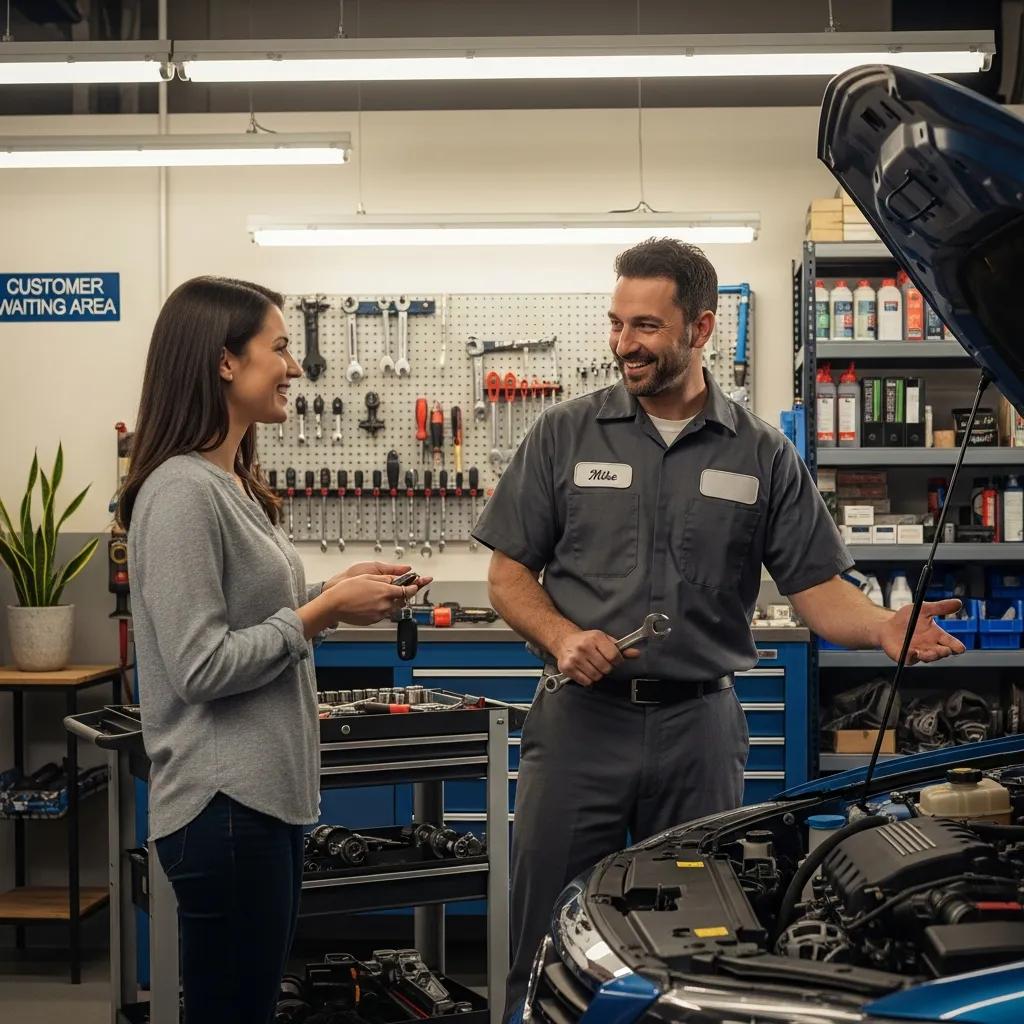
How to Choose a Trusted Mechanic Near Me: Your Guide to Reliable and Transparent Auto Repair
Finding a trusted mechanic near me starts with knowing what “trusted” actually means: consistent results, clear pricing, documented credentials, and respectful communication that protects your vehicle and budget. This guide teaches practical steps to evaluate local shops, the objective signals that distinguish reliable technicians from risky ones, and the precise questions to ask before you schedule work. You’ll learn how certifications, transparent estimates, customer reviews, and warranty practices combine to reduce repair risk and preserve vehicle value. The article maps the evaluation process across four core areas: key qualities to look for, questions to ask during initial contact, red flags to avoid, and how to weigh local options using concrete examples. Throughout, semantic cues such as specialization in European and Asian vehicles, diagnostic equipment, and warranty terms are highlighted to help you find a reliable mechanic in Castle Rock or any nearby neighborhood. Practical lists, comparison tables, and short verification scripts make it easy to act on this guidance when you search for a trusted mechanic near me.
What Are the Key Qualities of a Trusted Mechanic?
A trusted mechanic demonstrates measurable credentials, transparent pricing, consistent customer feedback, and clear warranty practices that protect owners from repeat failures. These qualities work together: certifications signal technical competence, transparent estimates reduce surprise costs, and third-party recognition or robust warranties indicate process maturity and accountability. Inspecting these attributes before you commit reduces the likelihood of unnecessary repairs and supports long-term vehicle health. The following checklist summarizes objective qualifying criteria to evaluate any local shop.
- Certifications and technical credentials such as ASE certification or factory training.
- Transparent pricing practices including written, line-item estimates separating labor and parts.
- Positive, recent customer reviews and third-party recognitions that verify consistency.
- Clear warranties or guarantees on labor and parts and documented repair records.
- Specialization for specific vehicle makes when complexity or proprietary tooling is required.
This shortlist helps you prioritize inspection steps during a phone call or visit and leads naturally into why specific certifications and pricing practices matter for repair outcomes.
Why Are ASE Certified Auto Technicians Essential for Quality Repairs?
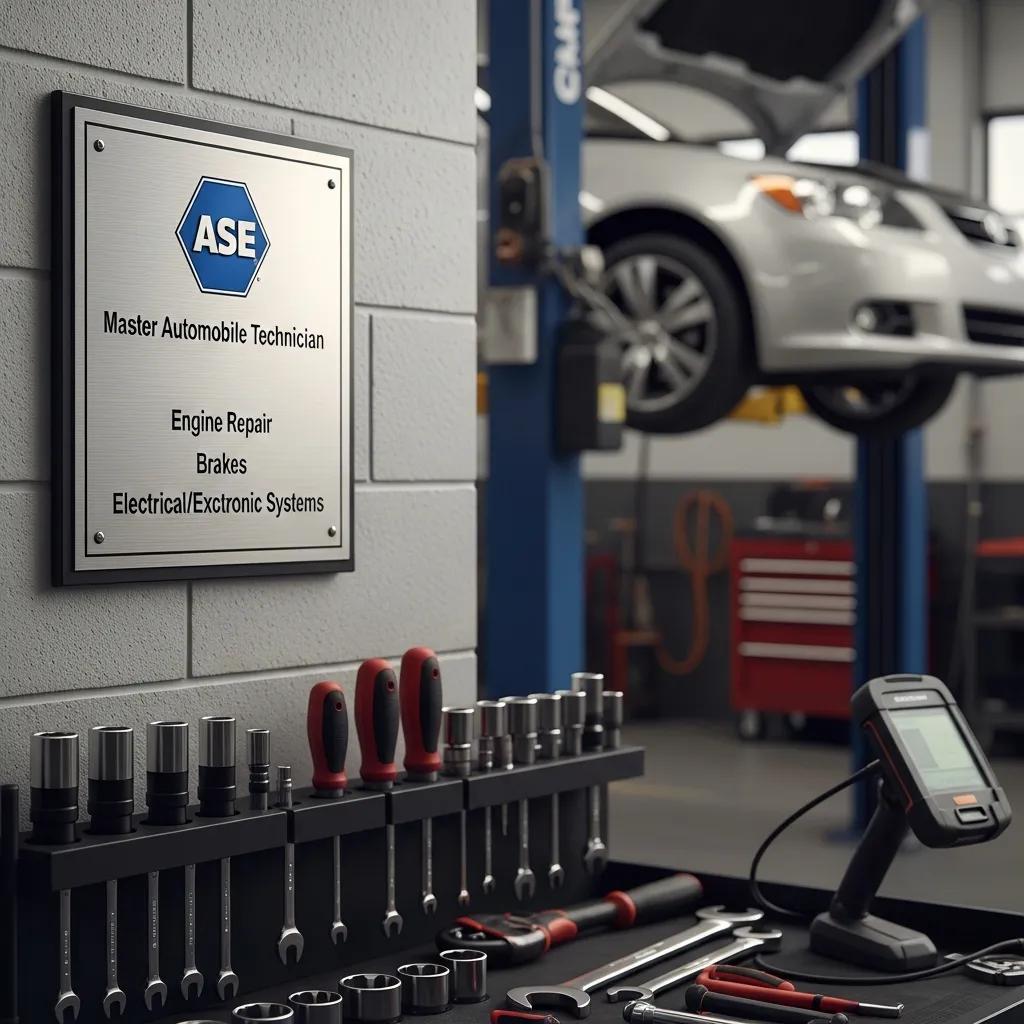
ASE-certified mechanics demonstrate a standardized, industry-recognized level of technical skill that reduces diagnostic error and lowers the chance of repeat repairs. ASE (Automotive Service Excellence) focuses on core competencies—engine performance, diagnostics, transmissions, brakes—and certification requires technicians to pass rigorous exams that validate their knowledge. In practice, ASE certification correlates with faster, more accurate fault isolation and more reliable repair procedures, which saves time and money for owners. When you call a shop, ask which ASE tests their technicians hold and whether certificates are posted or available on request to verify claims.
How Does Transparent Pricing Build Trust in Auto Service?
Transparent pricing means providing a written, itemized estimate that separates parts, labor, and diagnostic time while clearly noting warranty terms for each item. This clarity prevents ambiguous “shop supplies” or undisclosed markups and lets you compare quotes across providers objectively. Requesting a line-item estimate before authorizing work creates a documented baseline for any later disputes and helps you spot unnecessary add-ons. When shops explain labor rates, parts sourcing (OEM vs aftermarket), and warranty coverage up front, it signals both operational transparency and respect for the customer’s decision-making process.
Different credential types and warranty offerings make a practical difference when choosing a shop. The table below helps contrast common credential sources and typical warranty scopes so you know what to expect from a quality provider.
| Credential Type | What It Shows | Typical Warranty/Guarantee |
|---|---|---|
| ASE Certification | Industry-standard technician competence across systems | Labor guarantees often 12 months / 12,000 miles |
| Factory/Dealer Training | Brand-specific procedures, diagnostic protocols, and tooling | Manufacturer-aligned warranty handling or extended labor terms |
| Independent Specialty Certification | Deep expertise for specific systems (e.g., transmissions, brakes) | Work-specific warranties, often 6–12 months |
| Shop Memberships / Third-Party Awards | Process controls and customer service benchmarks | Publicly posted service guarantees and dispute resolution |
This comparison clarifies which credentials matter for diagnostic accuracy and which warranty types provide real post-repair protection.
Which Questions Should You Ask to Find a Reliable Mechanic Near You?
Start every initial contact with a short, consistent checklist that verifies certifications, diagnostic approach, pricing transparency, parts sourcing, and warranty terms. These questions reveal whether a shop relies on evidence-based diagnostics or on sales-driven recommendations. Use the numbered checklist below during a phone call or in-person visit to make a quick, objective assessment and follow up on any vague answers with a request for written confirmation.
- What certifications do your technicians hold and can you verify them?
- How do you diagnose problems and will I receive a written estimate before work?
- What parts do you use (OEM, aftermarket) and what are the warranty terms?
- How long will the repair take and do you offer loaner vehicles or shuttle service?
- Can you provide recent references or public review examples related to this repair?
These questions prioritize verification and documentation, and they make it harder for a shop to rely on vague reassurances. Mapping those answers to objective expectations helps you compare shops fairly.
Below is a pricing-focused comparison to help you evaluate estimates and spot hidden components in quotes. Use this when a shop sends an estimate so you can quickly audit what’s included.
| Service | Typical Pricing Component | What to Ask / Expect |
|---|---|---|
| Brake job | Parts, labor (per axle), resurfacing, disposal fee | Ask for parts brand, labor hours, and whether machining is included |
| Diagnostics | Flat diagnostic fee, scan time, troubleshooting labor | Ask what the fee covers and whether it’s waived with repair authorization |
| Engine repair | Parts, labor, machine work, fluids | Request line-item parts list and estimated labor hours |
| Routine maintenance | Parts, labor, filters, shop supplies | Confirm exact items covered and whether synthetic fluids add cost |
Use this table to compare line-item estimates and to challenge any unclear or bundled charges.
For practical confirmation, consider how a local, specialized shop answers these questions. Titan Auto Tech in Castle Rock makes many of these points explicit: their technicians are ASE-certified, they specialize in European and Asian vehicles which matters for brand-specific repairs, they use advanced diagnostics, and they offer customer conveniences like loaner vehicles, shuttle service, and an after-hours drop box. These attributes directly map to the verification checklist above and provide concrete examples of how a trusted local provider can meet your expectations.
What Should You Know About Certifications and Expertise?
Verifying credentials is straightforward: ask for technician names and which certifications (ASE or factory) they hold, then request to see posted certificates or a shop credentials page. Specialization matters for certain makes because brand-specific tools and training reduce diagnostic time and repair risk, especially for European and some Asian vehicles that use proprietary systems. When a shop claims specialization, ask how often they service your model and whether they maintain brand-specific diagnostic software or tooling. Prefer a specialist when the problem involves complex electronic systems or brand-specific procedures.
How to Evaluate Customer Reviews and Reputation Effectively?
Interpreting reviews requires pattern recognition more than single ratings: look for recent, detailed reviews that describe the same type of repair, note how the shop responds to complaints, and compare review volume to average rating. Consistent comments about timeliness, clear pricing, and warranty handling are strong signals; a single negative review about price isn’t definitive. Third-party recognitions and awards can multiply trust signals when they come from established evaluators, but always corroborate awards with recent customer experiences.
What Red Flags Indicate an Untrustworthy Car Repair Shop?
An untrustworthy shop often relies on ambiguous estimates, high-pressure sales tactics, inconsistent repairs, and a lack of documented warranty protection that leaves you exposed to follow-up failures. These warning signs are actionable: ask for a second opinion, request written proof of the quoted work, or walk away when a provider refuses to document scope and pricing. Quick checks in reception and on the invoice will reveal whether the operation is process-driven or opportunistic.
- Vague or verbal-only estimates without itemized breakdowns.
- Pressure to approve additional repairs without documented diagnostics.
- Frequent customer complaints about repeat repairs for the same issue.
- Reluctance to provide warranty or part numbers for replaced components.
Seeing any of these red flags should prompt immediate next steps like requesting written estimates or seeking an independent diagnostic scan to prevent unnecessary expenditure.
How to Spot Hidden Fees and Unclear Pricing?
Hidden fees commonly appear as “shop supplies,” disposal fees, or labor minimums buried in the invoice. To challenge these, ask for an itemized final invoice showing each charge with a clear description and unit price. Use this short script when speaking with service advisors: “Please provide a written, line-item estimate showing parts, labor hours, and any additional fees before I approve work.” If a shop refuses or avoids specifics, consider it a valid reason to compare other quotes. Transparent invoicing should make it easy to reconcile the final bill against the original estimate.
| Service Category | Common Hidden Component | How to Request Clarity |
|---|---|---|
| Routine Maintenance | “Shop supplies” or disposal fees | Ask for an explicit dollar amount or removal if negligible |
| Diagnostics | Separate troubleshooting charges | Ask whether diagnostic fee is credited to repair cost |
| Parts Replacement | Core charges or restocking fees | Request part numbers and brand names in the estimate |
This table helps you spot typical billing traps and gives you precise questions to demand clear answers.
What Are Warning Signs in Communication and Service Quality?
Poor communication often shows as missed callbacks, evasive answers about cause and cost, or inconsistent explanations of repair steps. Physically, a cluttered shop floor, missing paperwork, or no visible process for quality control are practical signs of weaker operations. If service advisors can’t explain the diagnostic steps or the expected outcomes, escalate the conversation to a service manager or request a written scope. Good shops document everything and provide a single point of contact, which improves accountability and reduces the chances of miscommunication.
Why Choose Titan Auto Tech as Your Trusted Auto Repair Shop in Castle Rock?
Titan Auto Tech aligns with the selection criteria above by combining technician credentials, targeted specialization, advanced diagnostics, and customer conveniences that reduce friction for vehicle owners. Their team includes ASE-certified technicians who perform structured diagnostics, which addresses the most common cause of repeat repairs—misdiagnosis. Specialization in European and Asian models ensures access to brand-specific tooling and procedures needed for complex systems, while visible processes—such as written estimates and documented warranties—support transparent pricing expectations. Customer conveniences like loaner vehicles, shuttle service, and an after-hours drop box make scheduling and repairs less disruptive, and independent recognition as a 2023 CARFAX Top-Rated Service Center serves as a third-party signal of consistent service quality. For local drivers in Castle Rock, these attributes map directly to the checklist in earlier sections and illustrate how a focused, credentialed shop reduces repair risk and improves long-term ownership experience.
How Does Specialization in European and Asian Vehicles Ensure Expert Care?
Specialization matters because many European and select Asian models require unique diagnostic software, factory-level procedures, or proprietary tooling that generalist shops may lack. A specialist reduces diagnostic time by using the correct trouble codes and manufacturer procedures and minimizes the chance of incorrect part replacement that leads to repeat visits. In practical terms, specialists often preserve vehicle value by maintaining service histories consistent with brand requirements and by using approved repair methods. When your car has complex electronic or drivetrain systems, favor shops that explicitly list expertise with your specific make and model.
What Customer Convenience Services Enhance Your Repair Experience?
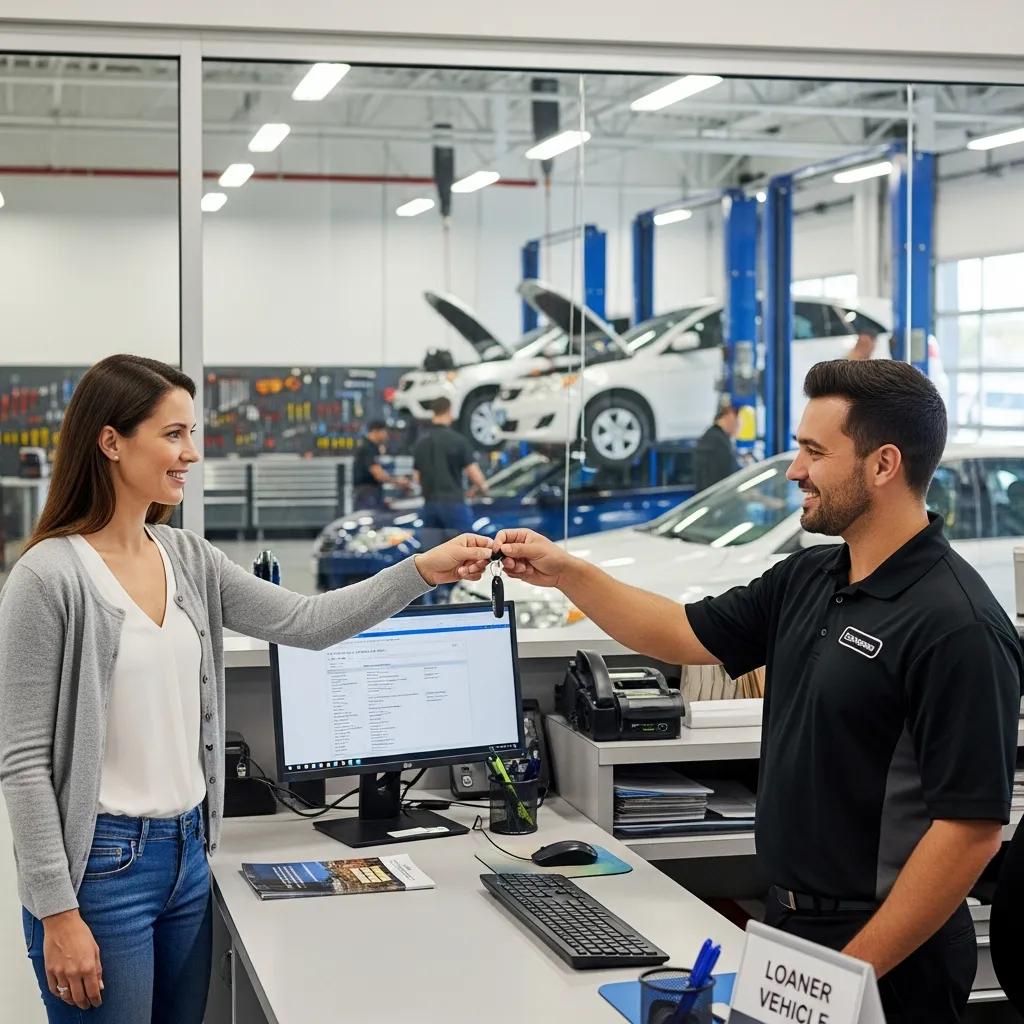
Operational conveniences reflect a shop’s service maturity and focus on customer experience: loaner vehicles let you keep daily routines while the car is in for extended repairs; shuttle service provides local transport for shorter jobs; and an after-hours drop box supports emergency or off-schedule drop-offs without disrupting your day. Always ask about eligibility, any potential fees, insurance coverage for loaners, and reservation requirements to avoid surprises. These services indicate a shop that plans for customer needs and treats repair as a coordinated service, not just a mechanical transaction.